
'It is a tense border and there are numerous elements that keep these tensions alive.' 'India is willing to militarily respond if provoked.'

Just like China wants Trump to lose the US presidential poll, it may want Modi to lose the Lok Sabha polls. So months before the 2024 elections, China may take possession of an important area, say one of the Char Dhams, warns Sanjeev Nayyar.


The US has the distinction of destroying a flawed but functioning State thrice since 1979. Pakistan has been their constant accomplice, explains Shekhar Gupta.

'Indian diplomacy faltered amidst multiple failures of statecraft.' 'The functionaries responsible must be held to account for their abject failure,' asserts Ambassador M K Bhadrakumar.
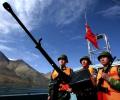
"As far as I know, China presently has not detained any Indian personnel," Chinese foreign ministry spokesman told a media briefing in Beijing while answering questions on the tense standoff between the Indian and Chinese troops at the Galwan Valley.

Media sources identified the soldiers, who belonged to the 21 Bihar Unit, as Naik Prem Nath Singh, Lance Naik Shambhu Saran Ray, Vyay Kumar Ray, Raghunandan Prasad and Naik Pundalik Mane
'Leaders of the two nations have reportedly agreed to set up a hotline between their respective military headquarters,' state-run Global Times daily reported on Wednesday.
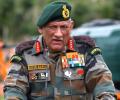
Responding to a question on the meeting between Pakistan Prime Minister Imran Khan and United States President Donald Trump in the US, Rawat said that Pakistan can do anything to get money.

The House passed by voice vote the Jammu and Kashmir Reservation (Amendment) Bill, 2019, to replace an ordinance issued by previous government, extending President's Rule in Jammu and Kashmir, amidst opposition from the Congress and some other parties.

The price for pushing the envelope beyond the comfort zone that the land of storytelling is used to is a hefty one, observes Meghna Chadha.

'India in 2020 is a lot better prepared than in 1962.' 'It is no longer a pushover; and anything other than a crushing Chinese military victory will be a major loss of face for China,' observes Rajeev Srinivasan in the first of a three part column.

'India needs offensive and defensive security measures to protect itself.'

Putin is looking beyond the current regime in Kyiv. Of course, if the Western military assistance to Kyiv continues in any form, Washington knows that Russia will regard it as a hostile act and there will be severe consequences, predicts Ambassador M K Bhadrakumar.

'You have been surrounded from all directions, if you want the safety of your troops and your personal safety, we will give you eight hours to make up your mind to surrender.'

The US has also urged the two South Asian neighbours to avoid further military action.

'The Kashmir issue has become internationalised after nearly half a century.' 'India, not Pakistan, has done so pro-actively,' says Shekhar Gupta.
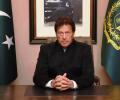
India cannot afford to be complacent about a possible Pakistan resort to military options across the LoC, warns Rana Banerji, who headed the Pakistan desk at the Research and Analysis Wing, India's external intelligence agency.
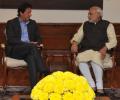
Should India engage Pakistan's generals directly, bypassing Imran? Ambassador G Parthasarathy, India's former high commissioner to Pakistan, ponders Delhi's diplomatic dilemma.
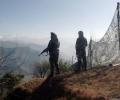
'No prime minister of India is averse to normalise relations with Pakistan, if it is possible to do so without altering our fundamental position on Jammu and Kashmir,' notes Ambassador T P Sreenivasan.

After receiving the United States backing on the issue of terrorism emanating from Pakistan, Prime Minister Manmohan Singh will meet Nawaz Sharif in New York on Sunday when he is likely to ask him to rein in terror elements operating from their soil and unleashing violence in India.

General Zhao Zongqi is well known in India for having commanded the Chinese troops during the Dokalam episode. Zhao knows every inch and corner of the Indian border, at least the Eastern and Central sectors, including the Naku La area which witnessed fist-fights between Indian and Chinese troops in April/May. Claude Arpi introduces us to the PLA generals masterminding the Chinese aggression in Ladakh.
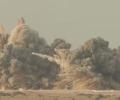
'A conventional war is not in fashion today and not seen as being able to deliver the objective.' 'Perhaps surgical strikes that are deeper, this time not on Pakistan's terrorist facilities, but on Pakistan army facilities.' 'The nation has to be prepared for losses.' 'War is not something that can be pussyfooted around.' 'If we go for limited number of posts in Kashmir, these are very difficult posts to capture and very difficult operations.' 'Be prepared for 200 to 300 killed.'

'India never tried to grab land of its neighbours like Bhutan and Bangladesh'
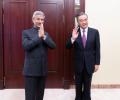
The effort made to define the larger picture by focussing on history and the wish not turn differences into disputes and conflicts is welcome. In the obtaining circumstances today, nothing more could have been possible, observes Ambassador T P Sreenivasan.
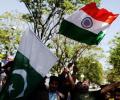
Pakistan has drawn the attention of the United Nations to what it said was India's "intention" to escalate tension on the Line of Control by launching artillery barrages, which were threatening regional peace and security.

'We must acknowledge China will use Pakistan against India.' 'We all need to know that these two countries are ready to destabilise India at all times.'

The Global Times, in an editorial, titled 'Sitharaman greeting sends warm signal', said that the Indian defence minister's traditional 'namaste' greetings to the Chinese soldiers conveyed her hope for peace along the border and "unwillingness to see a new stand-off," adding that this was an attitude of Prime Minister Narendra Modi's government at the Centre.

'The numbers of troops on both sides are enormous.' 'They are about 50,000-60,000 soldiers facing each other in that sector -- that's about the total number of troops that both sides had in the 1962 War in all sectors.'

'The world's patience on terrorist safe havens is running thin and that is not good for Pakistan'

The road ahead will be long and winding and much resistance can be expected from the high-flying 'hawks' in our skies. But that should not deter the policymakers from planning a road map with the 'big picture' in mind, observes Ambassador M K Bhadrakumar.
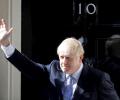
Britain is due to leave the European Union by October 31, with Johnson racing against time to strike a deal to meet that deadline.
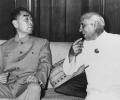
'Unquestionably, the spirit behind the Panchsheel agreement and the 'Hindi Chini bhai bhai' slogan were thrown overboard by the Chinese, and a trust deficit was injected between the two nations.' A revealing excerpt from General J J Singh's The McMahon Line: A Century Of Discord.

The bravado of NDA ministers may have undone the gains made in cross-border security cooperation over the past several years.
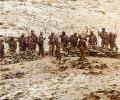
'They talk about their 2021 centenary goal, their 2035 goal, and their 2049 goal. They're accelerating. There's also been this unfortunately bashing of nationalism inside the People's Republic of China by the government'

'The COVID-19 pandemic must push the military into a long-term reconsideration of its primary challenges.' 'There must be greater emphasis on humanitarian aid and disaster relief including the management of contagious illnesses and impending crises caused by climate change,' notes Ajai Shukla.

'China's action towards India really gives you a good insight into how the Communist Party of China is thinking these days'
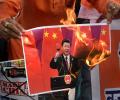
'And this mirror imaging is the most dangerous thing because it leads to tremendous misunderstandings.'

Guterres, who opened an emergency meeting of the 15-nation Security Council on Ukraine late Wednesday, in his brief off-the-cuff remarks said 'if indeed an operation is being prepared, I have only one thing to say from the bottom of my heart: President Putin, stop your troops from attacking Ukraine. Give peace a chance. Too many people have already died'.

'The Panchsheel Agreement is unique in the annals of international relations as it stands out as a bizarre illustration of a prime minister trading his country's crucial national interests solely to buffer his personal international image,' feels R N Ravi.
